Wren
Killers of the Flower MoonWren was a Ute investigator and an unusual presence in the Bureau of Investigation: the book describes him as a rarity among its agents, quite possibly its only American Indian. Experienced in delicate reservation cases and once a spy for revolutionary leaders in Mexico, he joined Tom White’s undercover team in Osage County in 1925. His importance lay not only in investigative skill, but in the perspective and access he brought to a case hindered by Osage distrust of federal agents.
Identity and Background
Wren was part Ute, a people whose homeland lay in what are now Colorado and Utah. He had black eyes and a twirled mustache, but the more consequential feature of his profile was his experience: before joining White’s investigation, he had served as a spy for revolutionary leaders in Mexico and capably handled sensitive cases on reservations. The account presents him as both an accomplished operative and an exception within a federal agency in which American Indian representation was almost nonexistent.
That difference mattered in the setting where he worked. Osage people faced federal supervision of their finances, including guardians appointed after officials classified many as unable to manage their own money. The classification was often tied to the amount of Indian blood in a person’s ancestry; full-blooded people were routinely placed under guardianship, while mixed-blood people rarely were. Under 1921 restrictions, guarded Osage could withdraw only a limited amount from their trust funds, even when they needed money for education or medical care. Wren’s background did not make him an Osage spokesman, but his presence offered White’s team a perspective distinct from that of the white agents whose conduct had reinforced local suspicion.
Skill and Conflict with Bureau Rules
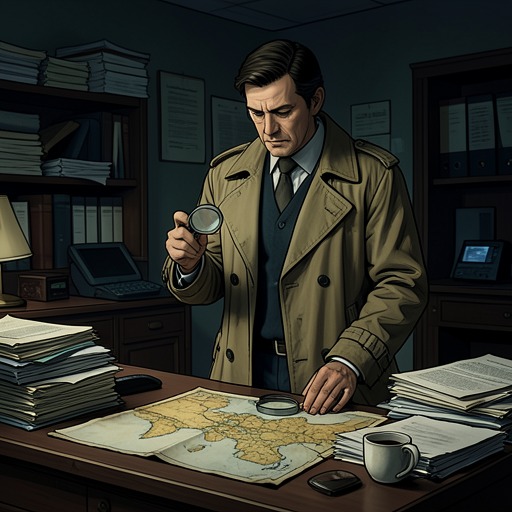
Wren’s professional record contained a sharp contradiction. A special agent in charge regarded him as exceedingly skilled at handling cases, and some of his work as brilliant. Yet Wren repeatedly failed to file reports and meet the Bureau’s regulations. His information remained in his head rather than being committed to paper, leaving the agency unable to treat investigative results as complete unless they appeared in the required written form.
That conflict cost him his position: he had washed out of the Bureau before White recruited him. J. Edgar Hoover reinstated him in March 1925, but made the return conditional on meeting the standards then in force and warned that failure would lead to a request for his resignation. Wren’s reappointment therefore joined two different measures of competence: the ability to handle a case in the field, which his superiors acknowledged, and the ability to produce standardized reports, which he had repeatedly neglected.
Assignment in Osage County
White brought Wren onto a team assembled to investigate the Osage murders, retaining several operatives with different skills and undercover approaches. Wren entered Osage County disguised as an Indian medicine man searching for relatives. The cover gave him a route into tribal gatherings and conversations that might have remained closed to a white lawman. White had advised his agents to keep their disguises simple; Wren’s identity allowed him to make inroads among Osage people without appearing as a federal investigator.
The need for that approach grew out of more than the difficulty of gathering evidence. Earlier agents had expressed contempt for Osage people in official reports and had proposed cutting off their allowances or jailing them to make them talk. Such prejudice deepened distrust and obstructed the investigation. White believed Wren could contribute an essential perspective, and reported that Wren had lived among Native people and managed that experience with unusual success. His assignment thus made his background operationally important: it helped the team seek information from people who might not otherwise speak to a white agent.
Investigative Role and Significance
Wren worked alongside agents who used other forms of cover: two posed as cattlemen and gained William K. Hale’s confidence, while another opened an insurance business and visited suspects. Wren’s method differed. Rather than approaching the community through business or through a presumed bond of shared ranching life, he attended tribal gatherings and gathered information within settings where his presence could be accepted. The account establishes this as a means of access, not as proof that any particular lead or solution resulted from his work.
Wren’s contribution also exposes the limits of treating undercover investigation as a matter of disguise alone. His role depended on a background that distinguished him from the white agents, at a moment when official prejudice had made those agents difficult for Osage people to trust. At the same time, his return to the Bureau depended on compliance with administrative rules that had previously clashed with his field practice. He appears in the investigation, then, as both a skilled operative and a contested fit within the institution: valued for the knowledge and access he could bring, yet expected to translate that work into the paperwork the Bureau demanded.